Can I Sell My 3D Prints?
Licences, copyright, fan art, AI models and safety rules, explained simply, so your little print business stays out of trouble.
Start readingThe short answer
Usually no — downloading a model (free or paid) does not give you the right to sell what you print from it. You need the designer's permission, normally through the licence attached to the file.
What you can safely sell: your own original designs, purely functional items, files marked for commercial use, and prints made from your own photos — like a lithophane.
1. Read the licence first
Almost every file on Thingiverse, Printables, MakerWorld, Cults or MyMiniFactory has a licence. It is the designer's answer to "may I sell this?" — and it applies whether you paid for the file or not. Most free files are non-commercial.
| Licence | Name | Sell prints? | What it means |
|---|---|---|---|
| CC0 | Public Domain (CC Zero) | Can sell | The designer gave up all rights. Print it, change it, sell it — no conditions. |
| CC BY | Attribution | Can sell | Sell and remix freely, but you must credit the original designer. |
| CC BY-SA | Attribution-ShareAlike | Can sell | Sell and remix with credit; any remix you share must carry the same licence. |
| CC BY-NC | Attribution-NonCommercial | Do not sell | Print it for yourself, remix it with credit — but no selling, of prints or remixes. |
| ND | No Derivatives | Check | You may not change the file. Selling depends on whether NC is also attached. |
| © | All rights reserved / Standard | Do not sell | Personal use only (e.g. Cults default, MakerWorld "Standard Digital File License"). |
| Paid | Commercial licence / membership | Can sell | Bought from the designer (Patreon tier, MakerWorld membership, etc.). Read its limits. |
| Editorial | Editorial licence | Do not sell | Only to illustrate articles about the subject. No selling, no remixing, no promotion. |
Each site has its own twist
- Cults — files are personal-use only unless the page says otherwise; some designers point you to Patreon for a commercial licence.
- MyMiniFactory — an "exclusive" (handshake) mark means the file may only be hosted there, even when you may use it.
- MakerWorld — the standard licence is personal use; many creators sell a monthly commercial membership that lets you sell prints.
- Patreon — popular designers (articulated dragons, for example) often include a sell-the-prints licence in a paid tier, while the same model elsewhere is non-commercial.
2. Fan art & famous characters
Marketplaces are full of superhero helmets and movie-character figures, so it must be fine? Not really. Big studios own the copyright and trademarks on their characters, and almost no small seller holds a licence. They are usually still on sale simply because the owners can't chase thousands of small shops — not because it is allowed.
- Studios have asked model sites to remove whole collections of their characters, and the sites complied.
- Since 2025, Etsy expects 3D-printed items to be designed by the seller — printing someone else's file, even with a commercial licence, may no longer qualify there.
- Very old works can enter the public domain (the earliest 1928 Mickey Mouse did in 2024), but the modern character and the company logo are still protected.
Rule of thumb: if people recognise the character or brand, don't sell it.
3. What you can sell
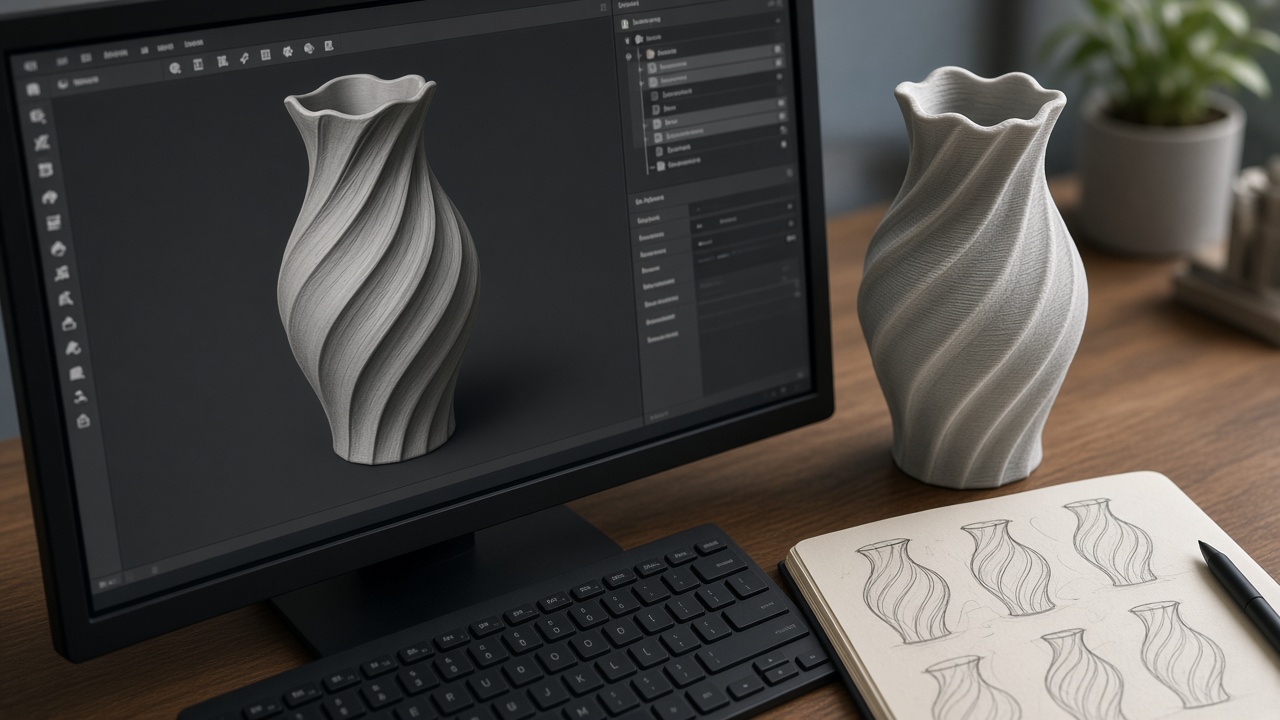
Your own original designs
Anything you model from scratch is yours — sell the print, the file, or both. Changing someone else's file is a remix (a derivative), and it stays one no matter how much you change. If you plan to sell, start from a blank file.
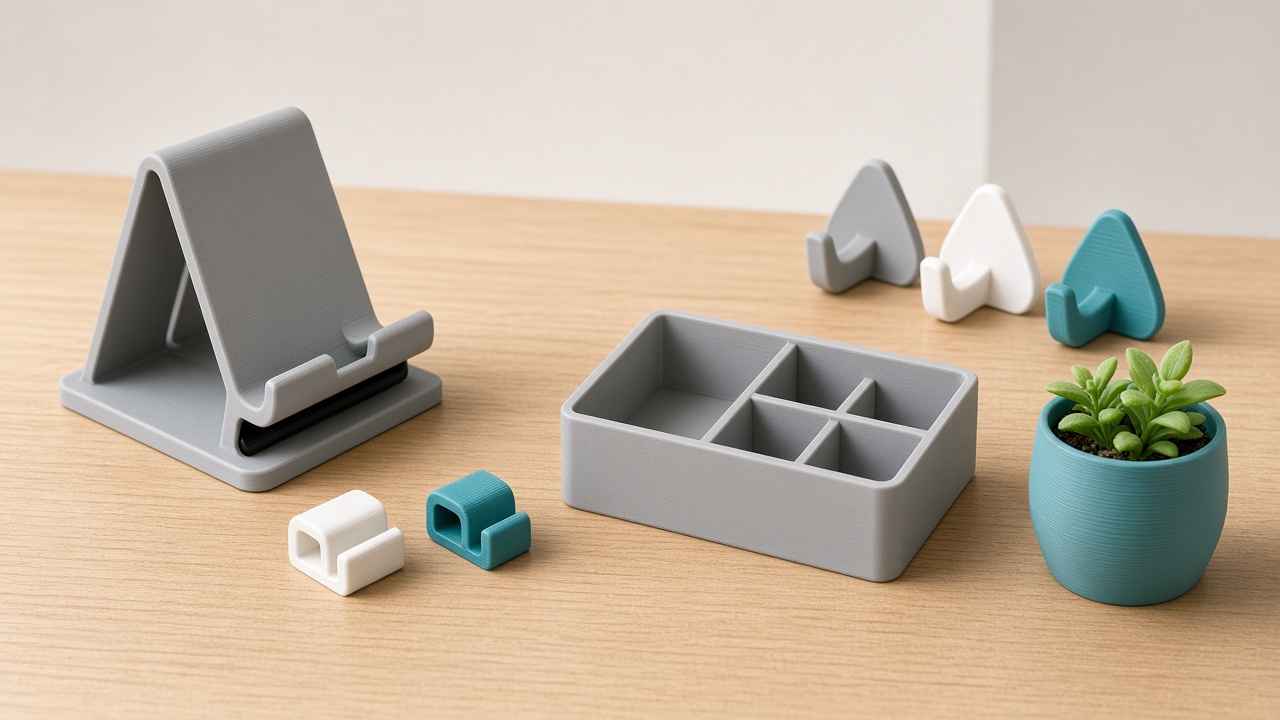
Useful, functional items
Copyright protects art and decoration, not pure function. Plain stands, clips, hooks and organisers are usually fine to sell — if you designed them or the licence allows it. But a functional item with a protected look (a branded helmet) is not, and official spare parts shared by manufacturers are often non-commercial.
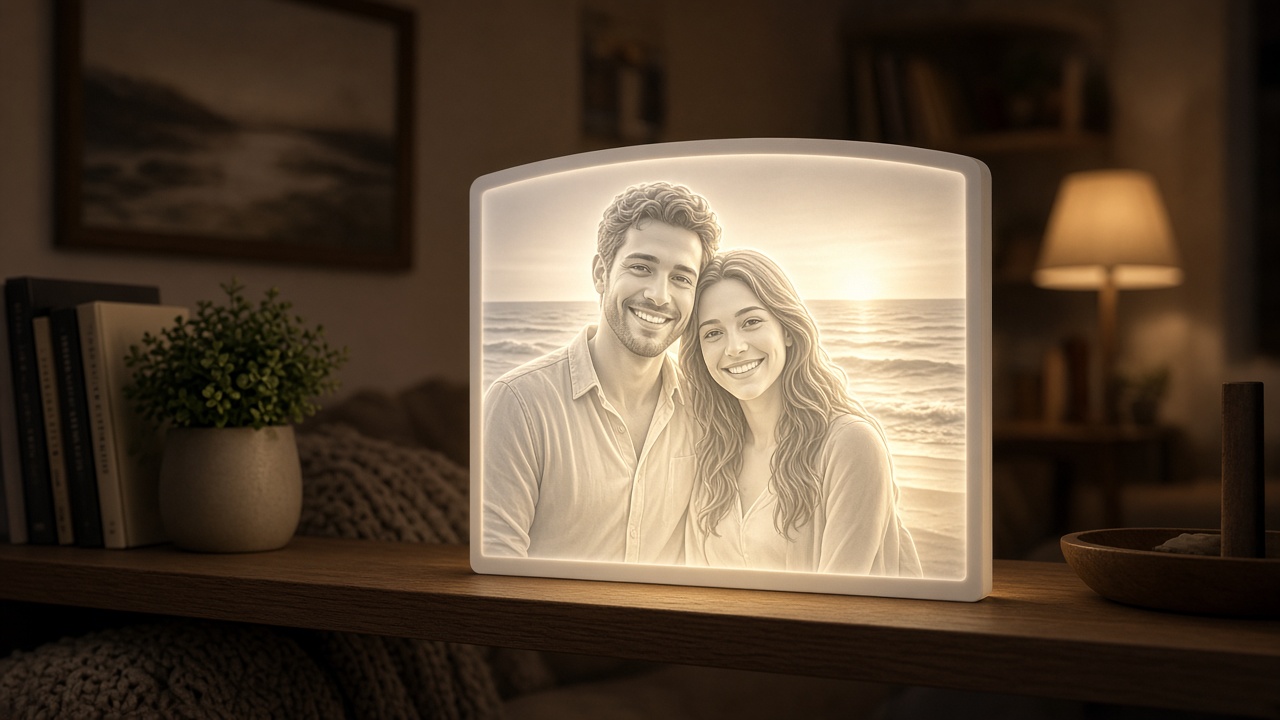
Prints from photos you have the right to use
A lithophane, lamp or keepsake made from your own photo — or a customer's photo they took themselves — is one of the safest things to sell. Avoid professional photos, celebrity pictures and anything copied from the internet.
Make it yourself here
Our tools turn your own photos and ideas into print-ready files that are yours to sell.
4. AI-generated models
AI tools can now turn a prompt or a picture into a printable model in minutes, and most of them let you own the result. You may sell prints from them — with two catches:
Don't feed it someone else's work
If you give the AI another designer's model or a character picture and ask for "the same, but with two tails", the result can still infringe. Recognisable characters stay protected, whoever (or whatever) made the file.
You may not be able to protect it
In the US and EU, copyright needs a human author. A model made from prompts alone is usually not copyrightable, so others may copy it. Real human work on top — editing it in CAD, adding your own parts — makes your claim stronger.
Some sites set their own rules too — MakerWorld, for example, asks for significant human creative input in AI-assisted uploads.
5. What happens if you get it wrong?
"I didn't know" is not a defence, and "everyone else does it" isn't either. In practice, the usual steps are:
- Takedown — the owner files a notice (in the US under the DMCA) and the platform removes your listing or file.
- Ban — repeat cases can close your shop or account for good.
- Lawsuit — rarer and expensive, so owners go after sellers making real money, asking for the profits plus damages. The more you sell, the more visible you become.
6. Selling files, or printing as a service
Print-on-demand service
Printing whatever file a customer sends is a popular side business, but it does not clean up a protected design — printing a movie character to order can still infringe. Set clear rules for what you accept, and never print anything illegal where you live.
Selling your own STL / 3MF files
If the design is truly yours, you can sell the files anywhere and choose the licence buyers get. If you find your work copied on Etsy, Cults or Amazon, you can report it and have it removed.
7. Tax, safety & other rules
Copyright is only part of the picture. Even a weekend craft-fair table can bring:
Sales tax & permits
Selling a few items can still count as retail. Check sales tax / VAT and any temporary seller permit.
Licences & event rules
Local business or vendor licences, plus the event's own vendor rules, which can be stricter.
Product liability
If a print breaks and hurts someone, the seller can be liable — even without any regulator involved.
Children's products
Toys must meet safety laws. "Not for small children" is not a defence. Magnets raise the risk a lot.
Food contact
Cookie cutters, cups and plates raise food-safety questions. Don't call PLA "natural" or "food safe" lightly.
Electronics & batteries
Add an LED base, USB lamp or battery and you are now selling electronics, with their own rules.
Wearables
Earrings, rings, masks and clips touch skin: think irritation, sharp edges and breakage.
Before-you-sell checklist
- I designed it myself, or the licence clearly allows selling prints.
- I gave credit where the licence asks for it (CC BY).
- No recognisable characters, brands or logos.
- Any photo used is mine or my customer's own.
- AI models were made from my own ideas, not someone else's work.
- I checked the marketplace's own rules (e.g. Etsy's design-it-yourself rule).
- Tax, permits and safety (kids, food, electronics, wearables) are covered.
Based on "Selling 3D Printed Items – A Legal Guide" by Carolyn Schwaar, All3DP Pro, licensed under CC BY 4.0. Rewritten and summarised for 3d-lithophane.com. Pictures are illustrations made with AI.